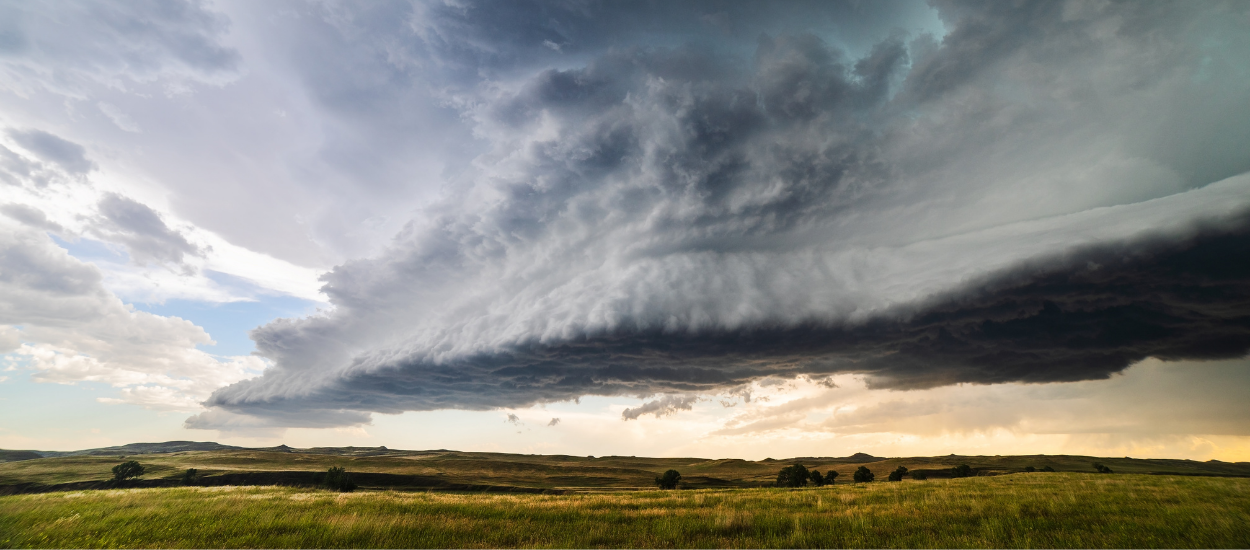
Maryland doesn’t ease into severe weather. A summer thunderstorm can go from clear skies to 60 mph wind gusts in under an hour. Derechos, nor’easters, and hail events hit Anne Arundel County and Central Maryland with enough force to strip shingles, crack flashing, and drive water into places it was never supposed to reach.
When the storm passes, most homeowners know they need to look at their roof — but not what to do next. This guide walks you through how to inspect safely, what storm roof damage actually looks like, how to handle your insurance claim, and how to find qualified storm damage roof repair near you without getting taken advantage of in the process.
The Storm You Don’t See Coming: Severe Weather in Central Maryland

When people think about home damage from severe weather, hurricanes usually come to mind first — they get tracked for days and give homeowners time to prepare. But the more frequent threat to your roof in Central Maryland often comes from two less-talked-about systems: the derecho, which can form and strike in under an hour, and the nor’easter, which gives plenty of warning but tests a roof through days of sustained wind instead.
What Is a Derecho?
Central Maryland’s summer heat and humidity make thunderstorms a near-daily occurrence from June through August. Most pass quickly with little more than hard rain. But when conditions line up, a cluster of thunderstorms can organize into a derecho: a long-lived, fast-moving band of storms producing widespread, straight-line wind rather than a tornado’s rotating winds. To qualify, a system must produce gusts of at least 58 mph along most of its path, with some derechos reaching 130 mph — strong enough to match a Category 1 or 2 hurricane. NOAA Storm Prediction Center
The danger is the lack of warning. Derechos are difficult to forecast, so a destructive event can develop with minimal lead time — a clear afternoon sky can turn into a wall of wind in the time it takes to bring in the patio furniture, if you get even that much notice.
A 58 mph sustained gust is already enough to tear shingles from the deck and rip flashing loose, and winds at that level are classified as severe specifically because of the damage they cause to roofs, trees, and power lines. Unlike a hurricane, a derecho doesn’t weaken before it reaches you, so the wind can hit at full force the moment it arrives. If you’ve lived in Anne Arundel County for any length of time, there’s a good chance you’ve already weathered one, even if you didn’t know what to call it. They show up almost every summer somewhere in the region, and a direct hit can knock out power for days and leave roof, siding, and tree damage block by block.
Nor’easters: The Storm That Takes Its Time
A nor’easter is the opposite problem. It’s a large, slow-moving coastal storm that pulls strong wind in from the northeast and can sit over Central Maryland for two or three days at a time, most often between September and April. Where a derecho hits hard and fast in one direction, a nor’easter wears a roof down with hours of sustained wind loading, gusts that shift direction as the storm rotates through, and rain that has time to find every gap. Gusts in past mid-Atlantic nor’easters have topped 80 mph, and the storm surge and flooding that often come with them can compound roof and gutter damage with water intrusion at the foundation as well.
Because nor’easters are tracked further in advance, they’re often treated as the lesser threat — real damage, but with enough warning that homeowners assume they have time to deal with it later. In practice, days of sustained wind can do just as much damage as a single hour of extreme gusts.
What This Means for Your Roof
No matter the storm, and the damage that follows, we’ve provided some tips that can help keep you safe while assessing if it’s time to call our crew at Fichtner Home Exteriors.
Step 1: Assess Safety Before You Do Anything Else
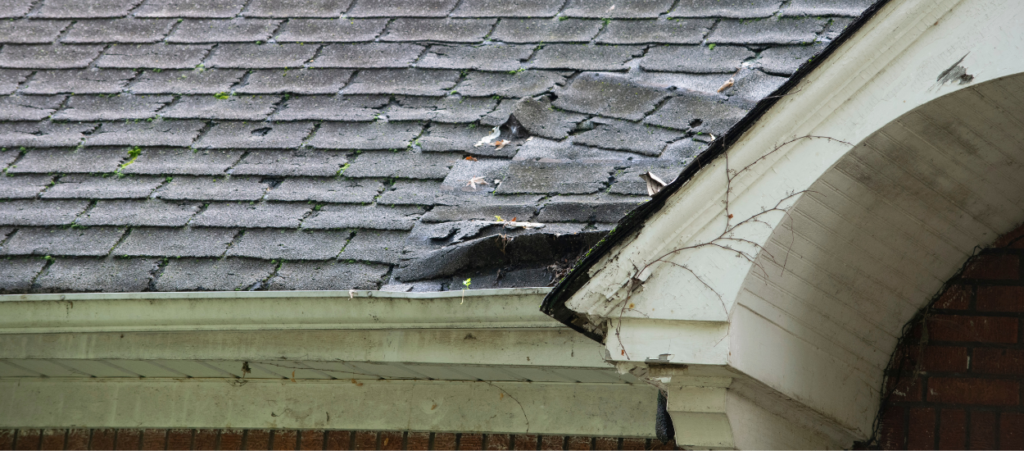
Before you look at the roof, look around it.
Check for downed power lines near the house or across the yard. If you see any, stay away and call your utility company. Look for hanging gutters, displaced siding, or broken tree limbs that could fall. If anything looks structurally compromised — a sagging roofline, a shifted chimney cap, a wall that looks out of plumb — stay out of the house until a professional evaluates it.
Do not get on your roof. Storm roof damage often includes hazards that aren’t visible from the surface: loose or missing shingles, wet decking, weakened structural framing. A roof that looks mostly intact from the ground can be unsafe to walk on. Leave the roof-level inspection to a licensed contractor.
What you can inspect from the ground and from inside:
Walk the perimeter and look for shingles or flashing on the ground, visible gaps or lifted edges along the roofline, dented gutters or downspouts, and impact marks on siding or trim. Inside, check ceilings for water stains, discoloration, or dripping.
Check the attic for daylight coming through the roof boards, wet insulation, or signs of active leaking. Check around windows, skylights, and chimneys — these are the most common entry points for water after a storm.
Step 2: Document Everything Before Any Cleanup Begins
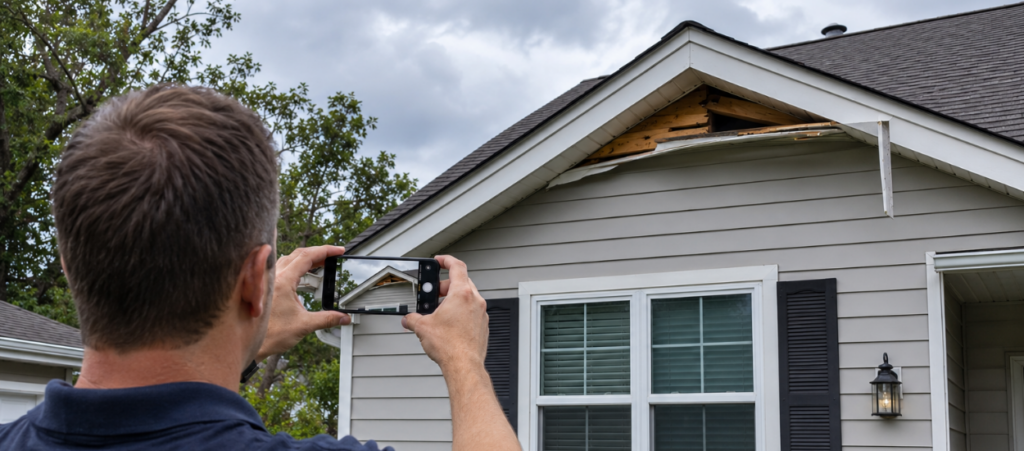
Thorough documentation before any cleanup or repair work starts is critical for insurance claims.
Photograph everything from ground level — wide shots that show the full roof plane and close-ups of specific damage. If you can safely photograph interior damage (ceiling stains, wet insulation, water on floors), do that too. Note the date, approximate time of the storm, and the type of weather event. Save any severe weather alerts or notifications you received.
Your insurer will need to establish that the damage was caused by a specific weather event, not by gradual wear. Timestamped photos taken immediately after the storm — before any temporary repairs — are the strongest evidence you can provide. If neighbors experienced damage from the same storm, that context can further support your claim.
Before You Let Anyone on Your Roof – Read This First
After a major storm, door-to-door contractors will show up at your home — sometimes within hours. Do not sign anything they hand you. These documents are often contracts, not inspection requests.
They can legally bind you to use that contractor for all repairs, or entitle them to 30% of whatever your insurance company pays out — before you’ve gotten a single competing estimate or had a chance to evaluate the work.
This isn’t a rare occurrence. According to the National Insurance Crime Bureau (NICB), reported instances of contractor fraud increased 38% between 2023 and 2025 — a period that saw the U.S. experience dozens of billion-dollar weather disasters. Criminals recognize the chaos after a storm as an opportunity, and homeowners who act quickly without doing their homework are the most common targets.
A legitimate contractor will inspect your roof, document the damage, and give you a written report with no strings attached. Pressure to sign on the spot is a red flag.
Types of Storm Roof Damage Common in Maryland
Not all storm damage looks the same, and some of it isn’t visible from the ground. Knowing what to look for helps you communicate clearly with your contractor and your insurance adjuster.
Wind Damage to Shingles and Flashing
High winds lift shingle edges, break the sealant bonds between layers, and can tear shingles off entirely. You may see shingles on the ground, exposed nail heads, or shingles that are visibly lifted or folded back. Wind damage typically appears in patterns — consistent directional lift concentrated along ridges and edges where wind pressure is highest.
Flashing around chimneys, skylights, and roof-to-wall transitions is especially vulnerable. Displaced or bent flashing creates immediate pathways for water intrusion. If you suspect flashing damage, our roof repair team can assess it before water gets in.
Hail Damage
Hail damage on asphalt shingles appears as dark spots or circular marks where the impact knocked granules loose, exposing the asphalt mat underneath. These marks are often not visible from the ground — they require close-up inspection to identify reliably.
Other indicators include dented gutters and downspouts, cracked siding, and dents on metal roof vents or flashing. If you see hail damage on these more visible components, the shingles likely sustained damage too. Hail damage is one of the most frequently disputed issues in insurance claims because it can be subtle and is sometimes confused with normal aging or blistering — which is exactly why a professional inspection and documented report matters.
Fallen Debris and Tree Damage
Tree limbs or entire trees can puncture the roof deck, crush structural framing, and displace large sections of shingles. The full extent isn’t always apparent from the outside — a limb that lands on the roof can crack decking and damage underlayment even if surface shingles look mostly intact.
If a tree or large branch is resting on your roof, don’t attempt to remove it yourself. Shifting the weight without understanding the structural damage underneath can make things significantly worse.
Roof Leaking Around the Chimney After a Storm
One of the most common post-storm calls we receive is a roof leaking around the chimney. This isn’t always caused by a hole in the roof. Driving rain pushed by high winds can force water sideways into chimney flashing joints and transitions that were never designed to handle lateral water pressure. The result looks like a roof leak but requires a different diagnostic approach than a standard shingle repair.
If you’re seeing water intrusion around your chimney after a storm, the flashing — not the shingles — is often the culprit. A thorough inspection will determine whether it’s a flashing failure, a mortar issue, or something else entirely.
How to File a Roof Storm Damage Insurance Claim
Contact your insurance company as soon as possible after the storm. Most Maryland insurers expect prompt reporting, and delays can give the insurer room to question whether the damage was storm-related or the result of deferred maintenance.
You’re expected to take reasonable temporary measures to prevent further damage — tarping exposed areas, boarding up a broken skylight, placing buckets under active leaks. These steps are typically covered by your policy.
However, do not authorize permanent repairs before the adjuster inspects. Replacing shingles or fixing flashing before the adjuster visits gives the insurer room to dispute scope or cause.
Get a contractor inspection before the adjuster visit. A licensed roofer can identify damage the adjuster might miss — particularly on steep slopes or where damage is subtle, like hail impact. A documented contractor report gives you an independent professional assessment to compare against the adjuster’s findings.
Know your policy type before the claim process begins:
- Replacement Cost Value (RCV) policies pay to replace materials at current market prices.
- Actual Cash Value (ACV) policies deduct for depreciation based on the roof’s age.
The difference can be significant on an older roof. Ask your agent which coverage you have if you’re not sure — it directly affects your payout.
How to Find Qualified Storm Damage Roof Repair Near You

This is where Maryland homeowners are most vulnerable. Severe weather events attract out-of-state contractors — often called storm chasers — who canvas affected neighborhoods with promises of free or insurance-funded roofs, then deliver substandard work with no local accountability. By the time problems surface, they’re gone.
Here’s how to protect yourself:
Verify MHIC licensing. Any contractor performing roofing work in Maryland must hold an active Maryland Home Improvement Commission license. You can verify any contractor’s status directly on the MHIC website. An unlicensed contractor cannot legally perform the work, and any warranties they offer are unenforceable.
Hire local. A contractor based in your community has a reputation to maintain, a team that can be reached for warranty service, and familiarity with local building codes and permit requirements. Read our full guide on how to verify a licensed roofing contractor in Maryland for a detailed breakdown of what to check before you sign anything.
Ask about manufacturer certifications. Certifications from manufacturers like GAF and TAMKO aren’t just marketing — they’re the only path to enhanced warranty coverage that includes workmanship. An uncertified installer can put the same shingles on your roof, but you forfeit the strongest warranty tier available.
Fichtner Home Exteriors is a GAF Master Elite contractor — a designation held by only 3% of roofing contractors in the U.S. — a TAMKO Pro Certified Contractor, and a Firestone Red Shield Certified Applicator. We’ve been recognized as one of Anne Arundel County’s top roofing companies for multiple consecutive years, and 75% of our business comes from repeat customers and referrals.
Free Storm Damage Roof Estimates in Anne Arundel County
If your roof sustained storm damage, we’re here to help — from initial inspection through insurance coordination to final repair or replacement.
Fichtner Home Exteriors provides free storm damage inspections across Annapolis, Anne Arundel County, Howard County, Baltimore County, and the surrounding communities. We document damage thoroughly, provide detailed reports for insurance purposes, and handle both emergency temporary measures and permanent repair.
Schedule your free inspection or call us at (410) 519-1900.
FAQs About Storm Roof Damage
No. Storm-damaged roofs may have loose shingles, wet surfaces, weakened decking, or hidden structural issues that make them unsafe to walk on. Inspect from the ground and from inside — look for shingles or debris in the yard, visible gaps or lifted edges, dented gutters, ceiling stains, and attic leaks. Leave the roof-level inspection to a licensed professional.
Why is my roof leaking around the chimney after a storm?
Chimney leaks after a storm are usually caused by flashing failure, not a hole in the roof. High winds drive rain sideways into the joints between the chimney and the roof surface — pressure those seals were never designed to handle. A proper inspection will determine whether the issue is flashing, mortar, or the chimney cap itself. Learn more about roof leak diagnosis and repair.
Most Maryland homeowner’s policies require prompt reporting. Delays give insurers grounds to question whether damage was storm-related or the result of deferred maintenance. Document damage immediately after the storm and contact your insurer as soon as possible. Review your specific policy for filing deadlines.
It depends on the extent of the damage, your policy terms, and your roof’s condition before the storm. If damage is widespread enough that repair isn’t practical, most policies cover replacement — but the payout depends on whether you have RCV or ACV coverage. ACV policies deduct for depreciation, which can significantly reduce the payout on an older roof.
Storm damage creates identifiable patterns. Wind damage shows consistent directional shingle lifting along ridges and edges. Hail produces random circular granule-loss marks across the roof plane. Age-related wear, by contrast, appears as uniform granule thinning, curling, or cracking distributed evenly across the surface. A professional inspection can distinguish between the two — and that distinction matters for your insurance claim.
Storm chasers are out-of-state contractors that follow severe weather events and canvas affected neighborhoods with promises of insurance-funded roof replacements. They typically aren’t licensed in Maryland, use substandard materials, and are gone before warranty issues surface. Verify MHIC licensing, hire a locally based contractor with a verifiable track record, and never sign a contract under pressure the day of the storm.